
PUBLIC HEALTH
What is already known about the subject?
- Mental health is closely linked to physical health, and chronic stress increases the risk of noncommunicable diseases.
- Exposure to green spaces (forests, parks) has a positive effect on mental and physical health, including a reduced risk of depression, Alzheimer's disease, and cardiovascular disease.
- Forest therapy (shinrin-yoku, forest bathing) is an evidence-based practice of immersion in a natural environment that helps reduce stress, normalize blood pressure and heart rate, and strengthen the immune system.
- Land art (art in a natural environment) can enhance the health-promoting potential of the environment.
- Forest therapy is being introduced as a practice in Russia, but there is a lack of evidence based on Russia's climatic and population characteristics.
What might this study add?
- For the first time in Russia, a comprehensive research project has been developed and implemented to assess the impact of forest therapy combined with land art on the mental state and objective health parameters of people.
- The pilot project results will lay the foundation for the development and scaling of forest therapy in Russia.
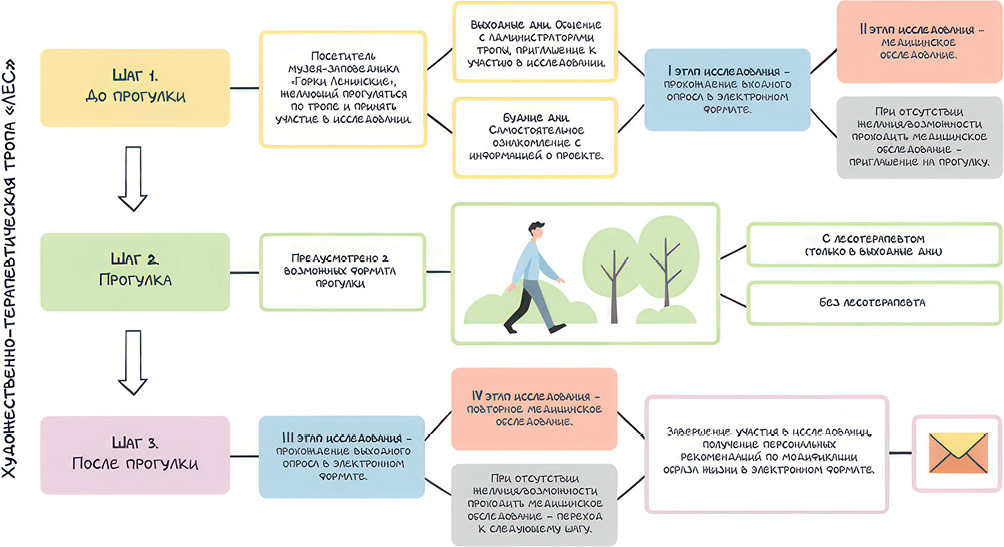
This article presents the design and methodology of the first Russian research project "Forest" Art Therapy Trail, dedicated to studying the effects of combination forest and art therapy. The pilot study was conducted from July to September 2025 on the grounds of the Gorki Leninskiye reserve museum.
Aim. To evaluate the impact of combination forest and art therapy on a person's mental status and mood, as well as on a number of objective health parameters.
Material and methods. Volunteers over 18 years of age who met the inclusion criteria participated in the study. The study protocol included assessing mental state using the standardized Profile of Mood States (POMS) questionnaire (short version) and assessing objective health indicators (blood pressure, heart rate, blood oxygen saturation) before and after completing a 2-kilometer route. The route integrates natural landscapes with art objects created by contemporary artists in the land art style. To facilitate data collection, a specialized digital platform was developed to record indicators over time. The study included various participation formats, such as independent walks with questionnaire completion and an extended protocol with a medical examination on weekends.
Conclusion. The obtained research results will form the basis for developing guidelines for the application of this approach as a tool for population-based prevention of noncommunicable diseases and the modification of risk factors such as physical inactivity and chronic stress in urban populations.
CARDIOMYOPATHY
What is already known about the subject?
- Hypertrophic cardiomyopathy and cardiac amyloidosis are characterized by myocardial thickening and can have similar patterns on magnetic resonance imaging.
- With atypical contrast distribution or its absence, distinguishing between these diseases using imaging data can be difficult.
What might this study add?
- Quantitative assessment of myocardial strain has been shown to improve the differential diagnosis between hypertrophic cardiomyopathy and cardiac amyloidosis.
- Left ventricular radial myocardial strain demonstrated the greatest diagnostic value and can be used in non-contrast imaging protocols.
Aim. To evaluate the diagnostic potential of cardiac magnetic resonance imaging (MRI) using left ventricular (LV) myocardial strain parameters in the differential diagnosis of non-obstructive hypertrophic cardiomyopathy (HCM) and cardiac amyloidosis.
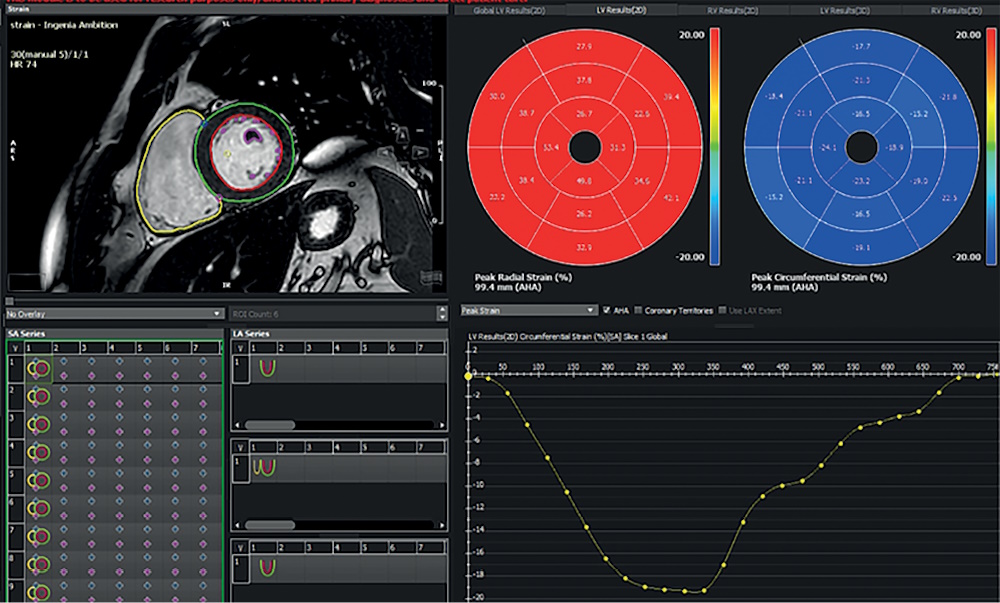
Material and methods. This single-center, retrospective, observational study included 48 patients as follows: 23 with non-obstructive HCM and 25 with cardiac amyloidosis (AL and ATTR types). All patients underwent contrast-enhanced cardiac MRI. Left ventricular morphofunctional parameters, delayed enhancement patterns, and global and regional myocardial strain indices (2D and 3D strain) were assessed. Statistical analysis included group comparisons and ROC analysis to determine the diagnostic significance of strain parameters.
Results. Atypical patterns of delayed enhancement or its absence were detected in 22% of patients, complicating imaging differentiation between HCM and amyloid cardiomyopathy. Among myocardial strain parameters, the most significant differences between groups were found for 3D radial strain of the LV, which was significantly lower in patients with amyloid cardiomyopathy compared to HCM (30,00±17,92 vs 45,98±20,16%; p=0,003). A 3D radial strain cutoff value <29,1% provided a sensitivity of 87% and a specificity of 57% in the differential diagnosis of these diseases. Differences in longitudinal and circumferential strain did not reach statistical significance.
Conclusion. Myocardial strain parameters, particularly LV 3D radial strain, have high diagnostic value in the differential diagnosis of non-obstructive HCM and cardiac amyloidosis, especially in cases of atypical or absent delayed enhancement patterns. Myocardial strain analysis can be considered a promising non-contrast method that expands the diagnostic potential of cardiac MRI and creates the rationale for short MRI screening protocols in patients with myocardial hypertrophy of unknown origin.
ATRIAL FIBRILLATION
What is already known about the subject?
- The combination of atrial fibrillation (AF) and chronic kidney disease (CKD) leads to a further decline in kidney function.
- Sodium-glucose cotransporter 2 inhibitors are a new class of drugs with proven nephroprotective action and are recommended for use in patients with CKD.
What might this study add?
- In patients with a combination of AF and CKD, sodium-glucose cotransporter 2 inhibitors have a more pronounced nephroprotective effect in patients with stage C3B CKD.
- To achieve a positive effect on kidney function in patients with AF, these drugs must be combined with renin-angiotensin system inhibitors.
Aim. To evaluate the changes of renal function during treatment with sodium-glucose cotransporter-2 (SGLT-2) inhibitors in patients with atrial fibrillation (AF) and chronic kidney disease (CKD).
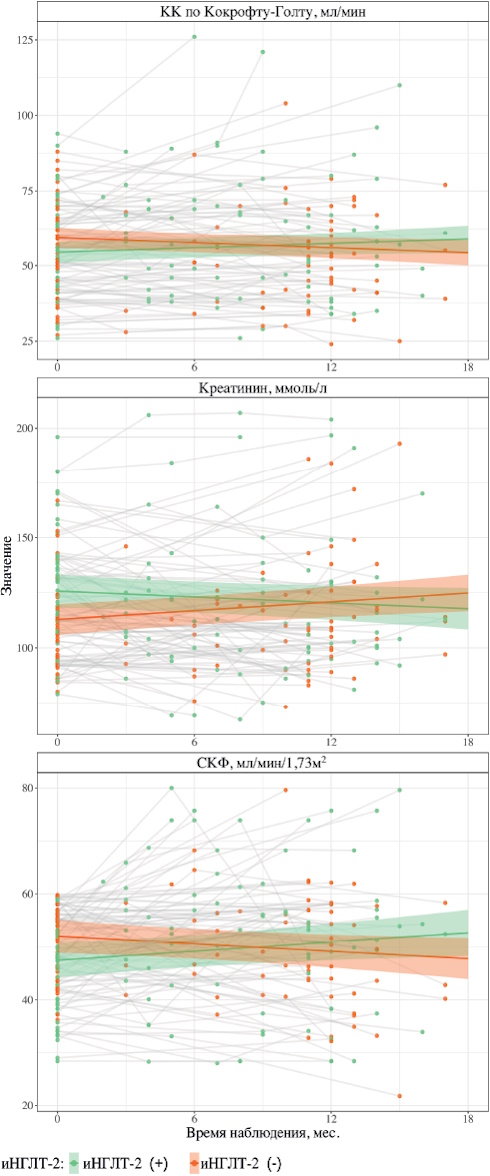
Material and methods. A total of 100 patients with AF and stage 3-4 CKD were included. Serum creatinine levels, creatinine clearance (CrCl) according to the Cockcroft-Gault equation, and glomerular filtration rate (GFR) using the CKD-EPI equation were assessed. A decrease in GFR ≥20%, a doubling of creatinine levels, and the development of acute kidney injury (AKI) were analyzed.
Results. After 18 months, the GFR in the study group averaged 10,1 (95% confidence interval: 3,6; 16,7) ml/min/1,73 m2 higher than in the control group. In patients with stage C3B CKD, the GFR level increased by 4,3±10,5 ml/min/1,73 m2 from baseline. Patients taking SGLT-2 inhibitors had an increased risk of progression from stage C3B CKD to stage C3A: odds ratio (OR) =0,53; 95% confidence interval: 0,42; 0,67. Differences in kidney function were observed only with renin-angiotensin system inhibitors. No doubling of creatinine levels or development of acute kidney injury was observed. There were no differences between groups in the incidence of a decrease in GFR ≥20%.
Conclusion. The renoprotective effect of SGLT-2 inhibitors is maintained in patients with combined AF and CKD, especially in patients with CKD stage C3B.
What is already known about the subject?
- Chronic kidney disease (CKD) is associated with an increasing incidence of paroxysmal atrial fibrillation (AF) as the disease progresses.
- Changes in serum electrolyte concentrations are one of the mechanisms for AF development in patients with electrolyte disturbances associated with stage C3a CKD.
What might this study add?
- The combination of CKD and albuminuria increases the risk and frequency of AF paroxysms.
- Using mathematical models, the incidence of AF paroxysms in patients with CKD can be predicted.
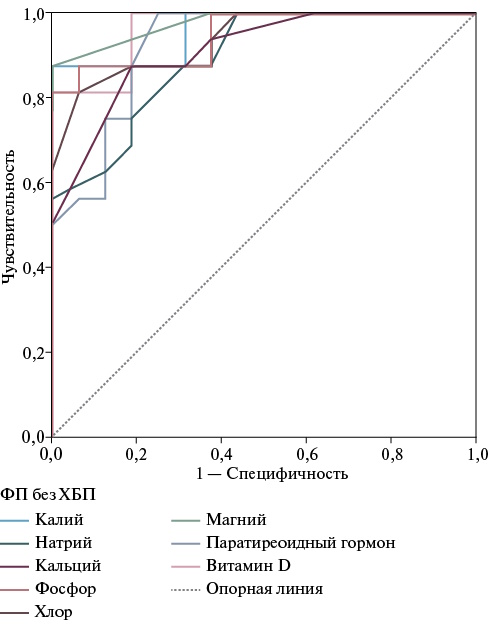
Aim. To evaluate the impact of blood electrolytes, parathyroid hormone, and vitamin D on the incidence of paroxysmal atrial fibrillation (AF) in patients with chronic kidney disease (CKD) with and without albuminuria.
Material and methods. A total of 76 patients with paroxysmal AF were examined and divided into three groups. The first group included 23 patients with AF but no CKD, while the second group — 28 patients with AF and CKD, and the third group — 25 patients with AF and CKD and albuminuria. The diagnosis in all cases was confirmed by anamnestic, clinical, electrocardiographic, and laboratory data. Prediction of the clinical course of AF was performed using multiple linear regression. There is a following multiple regression equation: Yx = a0 + b1´X1 + b2´X2 + b3´X3, where Yx is the dependent variable, a0 is the intercept, b1,2,3 are the regression coefficients, and X1,2,3 are the independent variables.
Results. A close relationship has been established between the incidence of atrial fibrillation in stage C3a CKD and blood electrolyte levels, parathyroid hormone, and vitamin D. A mathematical model for predicting the incidence of atrial fibrillation in patients with stage C3a CKD was developed based on blood electrolytes, parathyroid hormone, and vitamin D levels.
Conclusion. Blood electrolyte levels, parathyroid hormone, and vitamin D levels can be used to construct a predictive model for estimating the incidence of paroxysmal atrial fibrillation.
What is already known about the subject?
- Obstructive sleep apnea is common in patients with paroxysmal atrial fibrillation (AF) and is an independent risk factor for AF recurrence.
What might this study add?
- The use of positive airway pressure (PAP) therapy reduced AF recurrence recorded during the follow-up period in patients with a combination of obstructive sleep apnea and AF, regardless of the treatment type.
- The most significant clinical and economic benefit of PAP therapy was observed in comorbid patients receiving pharmacotherapy, resulting in a reduced AF recurrence and hospitalization rate.
Aim. To analyze atrial fibrillation (AF) recurrence during positive airway pressure (PAP) therapy in patients with a combination of obstructive sleep apnea (OSA) and paroxysmal AF, using various treatment strategies.
Material and methods. The study included 145 patients with paroxysmal AF and moderate to severe OSA. Patients were divided into four ageand sex-matched groups as follows: group 1 — patients receiving antiarrhythmic drug therapy (ADT) and PAP therapy (ADT+PAP therapy, n=42); group 2 — patients receiving ADT (ADT, n=39); group 3 — patients after pulmonary vein ablation (PVA) receiving PAP therapy (PVA+PAP therapy, n=36); group 4 — patients after PVA (PVA, n=28). All patients underwent a clinical examination, questionnaires, standard electrocardiography, echocardiography, and 24-hour electrocardiographic monitoring before PAP therapy and after 6-month treatment.
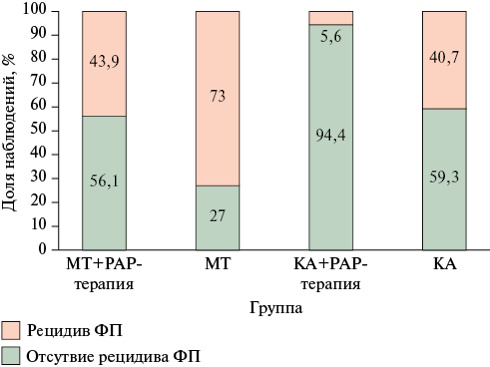
Results. In the ADT+PAP therapy group, the AF recurrence rate was 43,9% vs 73% in the ADT group. After 6 months, the ADT+PAP therapy group had a 2,3-fold decrease in the odds of paroxysmal AF episodes compared to patients in the ADT group (odds ratio (OR) 0,43; 95% confidence interval (CI): 0,24-0,79, p=0,009). In the PVA+PAP therapy and PVA groups, the proportion of patients with AF recurrence reached 5,6 and 40,7%, respectively. The odds of AF recurrence in the PVA group were >9,1 times compared to the PVA+PAP therapy group (OR 0,11; 95% CI: 0,02-0,48, p=0,001). The hospitalization rate for AF recurrence in the ADT+PAP therapy group (17,1%) was <3,3 times lower than in the ADT group (40,5%) (OR 0,3; 95% CI: 1,164-9,418, p=0,021). In the groups after catheter therapy, the differences in hospitalization rates were insignificant (p=0,305).
Conclusion. The addition of PAP therapy to pharmacological and/ or interventional treatment of AF can reduce the rate of arrhythmia recurrence and intensive care unit admissions, thereby reducing the burden on the healthcare system.
ФАКТОРЫ РИСКА
What is already known about the subject?
- Over the past 35 years, obesity rates among adults have more than doubled, which makes it one of the leading cardiovascular risk factors.
- Currently, there are conflicting opinions regarding the relationship between obesity and increased vascular stiffness.
What might this study add?
- Obesity in individuals with hypertension is associated with higher indicators of vascular stiffness, which requires further research to develop preventive measures aimed at preventing cardiovascular disease and to explore potential markers to assist clinicians.
Aim. To examine possible associations reflecting early vascular aging in male patients with hypertension (HTN) depending on obesity.
Material and methods. A total of 107 young and middle-aged male patients with grade 1-2 HTN were examined. Anthropometric and paraclinical parameters were assessed. Patients were divided into two groups based on their body mass index (BMI) as follows: group 1 included patients with normal BMI and overweight (18,5≲ BMI <30 kg/m2) and group 2 included patients with class 1-2 obesity (BMI ≥30 kg/m2). Biological age was estimated using a calculator based on the Framingham risk score.
Results. Patients with HTN and obesity had a significantly higher biological age compared to those with normal BMI and overweight (p=0,003), as did systolic blood pressure (p=0,04). Patients with HTN and obesity had significantly higher levels of triglycerides (TG) (p=0,009), highsensitivity C-reactive protein (CRP) (p=0,002), and lower levels of high-density lipoprotein cholesterol (p=0,007) compared to the group with normal BMI and overweight. When comparing the two groups of patients, no significant differences were found in photoplethysmography parameters (SI, RI, Alp75) depending on BMI. The Cardio-Ankle Vascular Index (CAVI) was significantly higher (p=0,018) in patients with HTN and obesity compared to individuals with normal BMI and overweight. Based on the obtained data, the relationship between CAVI and BMI, age, and systolic blood pressure was assessed using multiple linear regression.
Conclusion. In males with HTN, obesity was associated with higher CAVI values, indicating increased vascular stiffness and reflecting early vascular aging. Multiple linear regression analysis confirmed an independent relationship between CAVI and BMI and age.
What is already known about the subject?
- Standard lipid profile parameters do not always reflect the atherogenic potential of lipoproteins. Analysis of the high-density lipoprotein (HDL) subfractional profile allows to assess their heterogeneity in particle size and proatherogenic changes that are not detected by routine methods.
- Variations in the subfractional lipoprotein profile have been described in a number of studies, primarily in coronary and carotid artery atherosclerosis; however, data on femoral arteries (FA) are insufficient.
What might this study add?
- In patients with FA atherosclerosis, there is a redistribution of the HDL subfractional profile with a decrease in the proportion of large particles and an increase in the proportion of small particles, with no differences in standard lipid profile parameters.
- The distribution patterns of small and large HDL subfractions are associated with FA atherosclerosis and remain significant after adjustment for age, sex, and obesity.
- An association of obesity with an additional proatherogenic shift in the HDL subfractional profile in this category of patients was demonstrated.
Aim. To determine and characterize the features of the high-density lipoprotein (HDL) subfractional profile in patients with or without femoral artery (FA) atherosclerosis, as well as in relation to obesity status.
Material and methods. The study included 97 patients aged 34-80 years (mean age 59 years), with (n=47) or without (n=50) FA atherosclerosis, confirmed by imaging methods. Lipid profiles were determined using standard biochemical methods. The HDL subfraction profile was analyzed by electrophoresis in 3% polyacrylamide gel using the Lipoprint HDL Subfractions Testing System (Quantimetrix, USA). Additionally, we analyzed HDL subfractional profile in patients with FA atherosclerosis depending on the presence (n=23) or absence (n=24) of obesity (body mass index ≥30 kg/m2).
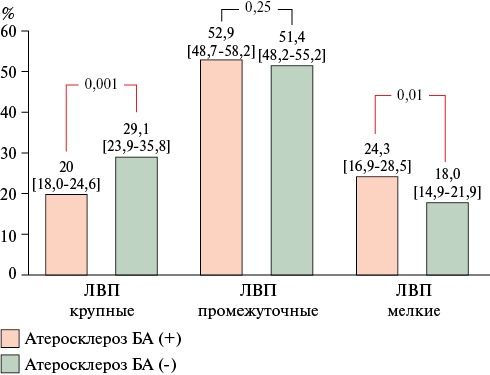
Results. No significant differences in the levels of standard lipid profile parameters were found between patients with and without FA atherosclerosis. However, differences in the HDL subfractional profile were found in the form of a lower proportion of large HDL1-3 subfractions and the accumulation of small HDL8-10 in patients with FA atherosclerosis. According to multivariate regression analysis, the association between the distribution pattern of HDL subfractions and FA atherosclerosis remained after adjustment for sex, age, and obesity. The small/large HDL subfraction ratio was significantly associated with FA atherosclerosis and demonstrated satisfactory discriminatory power in ROC analysis. In the group of patients with FA atherosclerosis, obesity was associated with an additional shift in the HDL subfractional profile toward a less atheroprotective profile.
Conclusion. FA atherosclerosis is associated with a lower proportion of large HDL particles and the accumulation of small subfractions. These features are qualitative in nature and are not detected by standard assessment of lipid profile parameters, which emphasizes the importance of HDL subfractional profile analysis. In patients with FA atherosclerosis, obesity was associated with an additional shift in the HDL subfractional profile toward particles with potentially lower atheroprotective activity.
What is already known about the subject?
- Hypertension (HTN) is a leading modifiable risk factor for cardiovascular diseases and premature mortality worldwide.
- The prevalence of HTN has been increasing globally, including among younger populations, partly due to lifestyle changes, such as poor diet, physical inactivity, obesity, and stress.
- Prehypertension, a precursor of HTN, is also prevalent among young adults and is associated with an elevated risk of progression to full hypertension and future cardiovascular events.
- In many countries, including Iraq, awareness, treatment, and control rates of HTN–especially among young adults–remain low.
What might this study add?
- This study provides the first comprehensive data on the prevalence of both prehypertension and HTN among young adults in Iraq, specifically medical students at Basrah University.
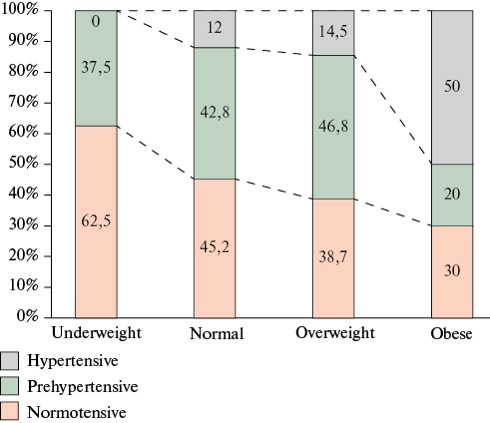
- This highlights the significant prevalence of undiagnosed and untreated HTN in this age group, with more than 55% of participants being either hypertensive or prehypertensive.
- This study also identified several key risk factors for HTN among young adults, including male sex, family history of HTN, tobacco use, high salt intake, and excessive consumption of caffeinated drinks.
- It underscores the urgent need for early detection and intervention, proposing the integration of HTN screening into routine university health assessments and advocating for public health campaigns aimed at raising awareness.
- These findings may inform future public health strategies and national screening programs in Iraq, addressing a growing but under-recognized health issue.
Objective. To assess the prevalence of prehypertension and hypertension (HTN) among medical students at the University of Basrah. The prevalence of HTN among younger populations has increased over the past few decades. However, data on the specific prevalence of HTN in younger age groups in Iraq remain limited.
Material and methods. A cross-sectional study was conducted involving 762 medical students (414 males and 348 females) selected using a multistage stratified random sampling technique. The study was conducted over a three-month period from January to March 2024. Data on sociodemographic characteristics and risk factors were collected using a self-administered questionnaire adapted from the World Health Organization’s STEP-wise approach. Trained personnel measured blood pressure (BP) and body mass index (BMI) following standardized protocols.
Results. The mean age of participants was 21.15 years. The overall prevalence of HTN was 13.4%, and 42.5% of students were classified as prehypertensive. Both HTN and prehypertension were significantly more prevalent among male students (16.7% and 55.1%, respectively) than female students (9.5% and 27.6%, respectively). Only 29.4% of the participants with HTN reported prior awareness and treatment.
Conclusion. This study revealed a notably high prevalence of HTN and prehypertension among medical students, most of whom were previously undiagnosed. These findings highlight the urgent need for early detection strategies, including implementation of national screening programs and enhanced community education on HTN prevention and management.
DIGITAL TECHNOLOGIES AND TELEMEDICINE
What is already known about the subject?
- Existing approaches to classifying digital solutions allow to divide them into two following groups: classifications based on various technical characteristics and on functionality.
- The vast majority of developed digital solutions classifications in healthcare are aimed at systematizing existing digital solutions.
What might this study add?
- The study developed a methodological approach to classifying digital resources in Russian healthcare. It is based on identifying four key groups of participants in the public healthcare system: healthcare managers at all levels, health workers, patients, and IT specialists. It also identifies their healthcare functions, for which digital resources meet their information needs.
- The developed digital resource classification architecture can help to systematize existing digital resources, identify digital transformation gaps and regulatory defects.
Aim. To develop a methodological approach to the functional classification of healthcare digital solutions in the Russian Federation (RF), based on satisfying the information needs of healthcare entities, and to formulate a classification architecture.
Material and methods. The material was drawn from Russian and international information sources on methodological approaches to compiling digital solution classifications, strategic documents and regulatory legal acts of the Russian Federation regarding healthcare digital transformation, and a description of the digital solutions used in Russia. There were following methods: content analysis, systematization, and comparison.
Results. Using the developed methodological approach, a following three-level classification architecture for healthcare digital solutions was created for four groups of healthcare entities, their function groups, and the functions of the entities: 1) functions of healthcare managers — planning, management, monitoring, and control of the healthcare system, implementation of public policy, resource and financing management, and strategic development of the industry; 2) functions of health workers — professional activities, medical record maintenance, use of telemedicine, and interaction between specialists; 3) Patient functions — receiving care, using their medical information, remote services, feedback, and managing their health; 4) Functions of IT specialists — ensuring the regulatory, technological, and architectural development of healthcare digitalization, including data management, security, standardization, and analytics.
Conclusion. The developed digital solutions’ classification architecture will allow us to systematize existing digital solutions and identify gaps in the implementation of strategic decisions and regulatory defects.
REVIEW ARTICLES
What is already known about the subject?
- The international PROBAST and TRIPOD-ML standards set strict requirements for the creation of predictive models using machine learning.
- Predicting the heart failure course using machine learning is an important task in personalized medicine.
What might this study add?
- For the first time, a methodological analysis was conducted, revealing a shortage of targeted studies and systemic flaws (data leakage, no validation) in Russia.
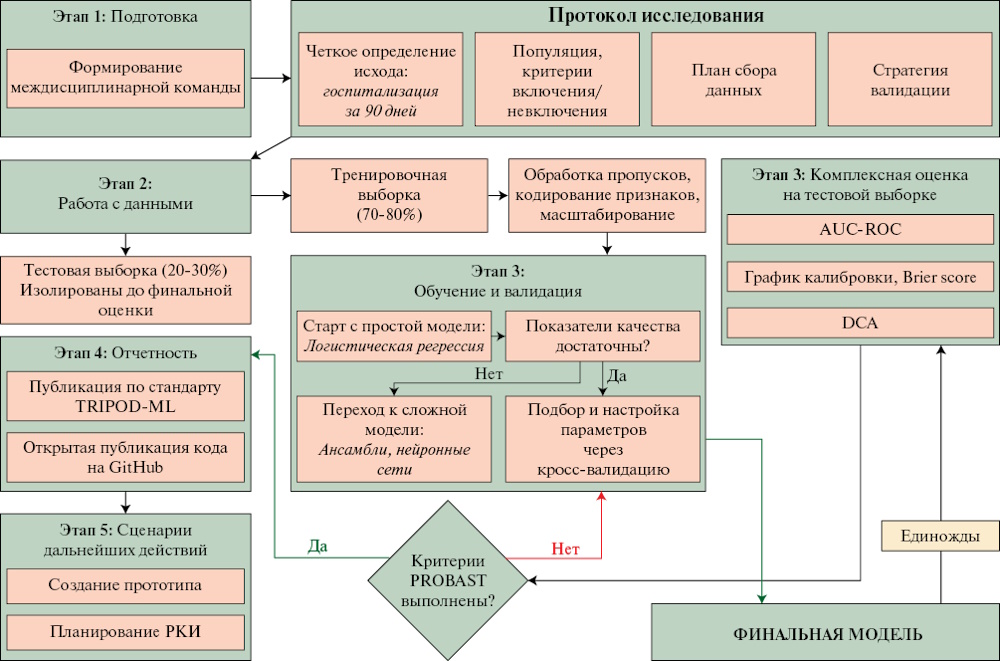
- A practical algorithm has been developed for Russian researchers, enabling the creation of reproducible and clinically useful models in a domestic setting.
The review aim was to develop a machine learning (ML) algorithm adapted to Russian conditions for creating reproducible prediction models of heart failure (HF) course, based on an analysis of international methodological quality standards and a review of existing practices. To this end, the international standards Prediction Model Risk Of Bias Assessment Tool (PROBAST) and Transparent Reporting of a Multivariable Prediction Model for Individual Prognosis Or Diagnosis — Machine Learning (TRIPOD-ML) were systematized. An extensive search and methodological assessment of Russian studies from 2016-2025, where machine learning was used in patients with HF, were also conducted. The analysis revealed a critical shortage of Russian studies devoted to predicting the HF course. A review of existing studies revealed the following systemic deficiencies: no external validation, data leakage at the feature selection stage, incomplete reporting, and neglect of clinical utility assessment. The causes of these problems are systemic and related to data fragmentation, interdisciplinary gaps, and regulatory gaps. The gap between international standards and Russian practice is not due to technological lag, but to a lack of methodological culture. A step-by-step, practical algorithm is proposed as a solution, focusing on strict data separation, comprehensive validation, transparent reporting, and clinical utility assessment. Implementation of this algorithm will be an important step in the development of evidence-based predictive modeling for HF in Russia.
What is already known about the subject?
- The most common method of screening for hypertension is direct blood pressure measurement.
- In a number of countries, a questionnaire is used for hypertension screening to identify key risk factors and predict the disease probability or to identify the risk of the disease outside of healthcare facilities.
What might this study add?
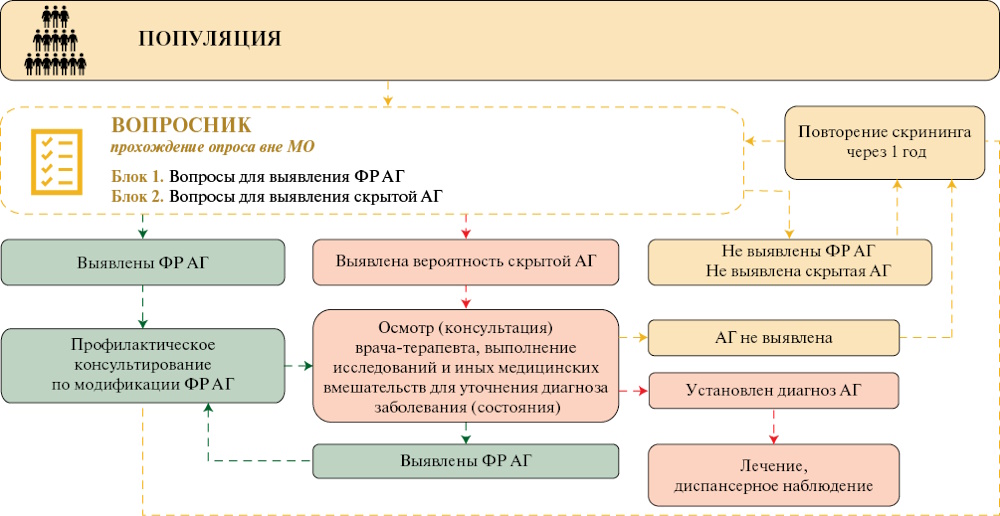
- For population-based screening outside of healthcare facilities, a questionnaire with a pre-developed prognostic scale should be used to assess the risk of the disease for subsequent medical intervention.
- The cost-effectiveness of population-based screening outside of healthcare facilities is achieved only by combining screening programs with follow-up monitoring and treatment of individuals at risk.
In the Russian Federation, hypertension (HTN) remains a socially significant disease with a high burden on the healthcare system causing significant socioeconomic losses. Currently, the most common and standard method of screening for HTN is direct blood pressure measurement in a healthcare facility. However, population coverage remains incomplete, primarily due to low preventive activity in certain age groups, particularly young people and individuals of working age. The high prevalence of HTN and its consequences necessitate the development of non-invasive population-based screening tools aimed at the early detection of HTN risk factors or the underlying disease among different age groups. A questionnaire may be the most accessible and simple population-based screening tool. This review analyzes and summarizes the experience of using questionnaires as a screening tool for HTN in various countries. Based on the review results, a model for population-based screening for HTN and its risk factors outside of healthcare facilities is proposed.
CLINICAL CASES
- Currently, the number of papers describing the combination of cardiac tumors and tuberculosis infection, differential diagnosis, and management aspects of this patient population remains extremely limited.
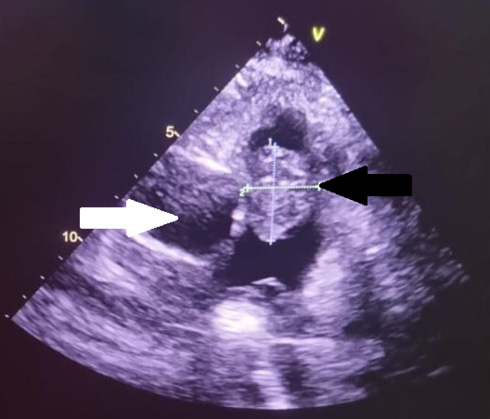
- A case of primary undifferentiated pulmonary valve sarcoma complicated by pulmonary embolism is presented in a patient with cavitary tuberculosis, which was initially diagnosed as a vegetation secondary to infective endocarditis.
- Successful left pulmonary artery thrombectomy was performed, resulting in clinical improvement.
- Late detection of cardiac tumors significantly impacts the patient's long-term prognosis, necessitating continued apprehensive attitude for tumors when cardiac masses are detected.
Primary pulmonary valve tumor is a rare pathology in cardiology practice. Long asymptomatic period and the manifestation of nonspecific complaints, such as a persistent cough, intoxication, shortness of breath, and chest pain, characteristic of a wide range of diseases, significantly complicate timely diagnosis. This article presents a case of primary undifferentiated pulmonary valve sarcoma complicated by pulmonary embolism in a patient with cavitary tuberculosis. This case is unique in demonstrating diagnostic pitfalls associated with the combination of this pathology with active tuberculosis. The stages of differential diagnosis with infective endocarditis and myxoma are described, and the role of morphological verification is emphasized. The patient underwent successful pulmonary artery thrombectomy, followed by replacement with a 21 mm bioprosthetic valve. Subsequent pathological examination confirmed the diagnosis of undifferentiated pleomorphic sarcoma (FNCLCC G3) with valve/artery wall invasion. The patient was discharged with clinical improvement. However, despite the success of the surgical intervention, his long-term prognosis remains uncertain due to the advanced disease stage at diagnosis. This case highlights the importance of apprehensive attitude to cancer when detecting cardiac space-occupying processes, taking into account a combination of clinical, anamnestic, and imaging data.
- Myocardial infarction (MI) with non-obstructive coronary arteries (MINOCA) accounts for up to 15% of all MI cases and requires a differential search for the underlying cause of myocardial injury.
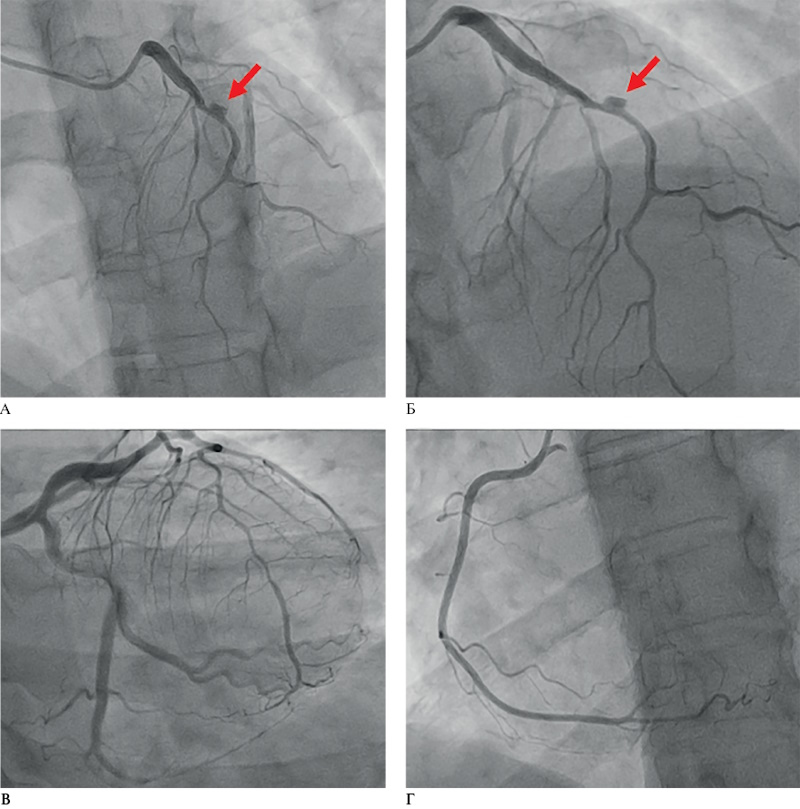
- Spontaneous coronary artery dissection (SCAD) is one of the common causes of MINOCA in young women and is often difficult to identify using coronary angiography.
- Intravascular imaging (OCT/IVUS) plays a key role in diagnosing SCAD and differentiating it from atherosclerotic lesions.
- The presented case demonstrates complete remodeling of the coronary artery wall after SCAD, underscoring the importance of comprehensive evaluation and a predominantly conservative management strategy.
Myocardial infarction with non-obstructive coronary arteries (MINOCA) is characterized by the absence of stenotic or occlusive lesions in the infarct-related artery on coronary angiography. MINOCA accounts for 6-15% of all MI cases and carries an annual mortality of up to 3,5%. The etiology of this syndrome is heterogeneous and includes atherosclerotic and non-atherosclerotic mechanisms, coronary vasospasm, microvascular dysfunction, thromboembolism, and spontaneous coronary artery dissection (SCAD). SCAD is one of the leading causes of MINOCA in young women and may present with intramural hematoma formation and transient luminal narrowing, often requiring intravascular imaging for an accurate diagnosis. This article describes a case of MINOCA caused by SCAD in a 34-year-old female patient, confirmed by comprehensive laboratory and imaging evaluation including intravascular techniques.
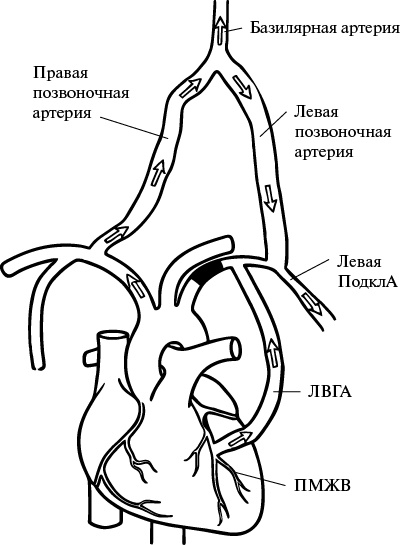
- Left subclavian artery stenotic or occlusion after coronary artery bypass grafting (CABG) with internal mammary artery can lead to coronary subclavian steal syndrome.
- Coronary subclavian steal syndrome in a patient with a functioning graft requires immediate revascularization of the subclavian artery.
- Endovascular intervention is the treatment of choice for symptomatic, hemodynamically significant stenosis or occlusion of the subclavian artery.
Introduction. Coronary artery disease remains the leading cause of death and disability worldwide. One treatment option is coronary artery bypass grafting (CABG) using the internal mammary artery (IMA). Subsequently, with left subclavian artery (LSA) occlusion or stenosis in patients after IMA grafting for CABG, angina symptoms may recur, leading to acute coronary syndrome (ACS), known as coronary subclavian steal syndrome (CSSS). This requires immediate revascularization. Endovascular intervention is the treatment of choice for symptomatic, hemodynamically significant LSA stenosis or occlusion.
Brief description. This case report presents a successful endovascular treatment of CSSS in a 59-year-old patient with multiple morbidities, which developed 9 years after CABG of the left anterior descending artery and presented with clinical symptoms of high-class angina. We described technical challenges of LSA stenting due to a single brachial approach and the need to maintain the patency of the mammary-coronary bypass graft.
Discussion. This case report demonstrates that endovascular LSA revascularization in CSSS is effective and safe. The potential for CSSS development highlights the need to include LSA assessment in the evaluation of patients after CABG using the IMA and the importance of timely revascularization.

ISSN 2619-0125 (Online)