ADDRESS TO THE READERS

ARTERIAL HYPERTENSION
What is already known about the subject?
- Hypertension (HTN) remains the leading risk factor for cardiovascular disease, which accounts for the largest number of deaths both in Russia and worldwide.
- It is currently known that cardiovascular mortality rates are higher in rural areas than in urban areas, but the influence of settlement type on HTN characteristics remains poorly understood.
What might this study add?
- In the Novosibirsk Oblast, the incidence of HTN was independent of settlement type. Awareness of HTN and antihypertensive therapy use were higher among men living in rural areas, but despite this, they were less likely to achieve effective BP control than men living in cities.
- When comparing the frequency of HTN risk factors, men in rural areas were more likely to have class III obesity, including abdominal obesity. Men living in the city were more likely to have low-density lipoprotein hypercholesterolemia, reduced physical activity, and alcohol consumption. The likelihood of HTN, regardless of the type of settlement, increased with abdominal obesity and hyperglycemia. In the city, the HTN likelihood was also associated with age.
Aim. To compare the main risk factors for hypertension (HTN), its incidence, treatment coverage, treatment patterns, and blood pressure (BP) control among men living in Novosibirsk and rural areas of the Novosibirsk Oblast.
Material and methods. The study included 900 men aged 35-74 years registered at the Novosibirsk outpatient clinics and central district hospitals in the Ordynsky and Kochenevsky districts of the Novosibirsk Oblast. Hypertension was considered diagnosed if systolic BP exceeded 140 mm Hg and/or diastolic BP exceeded 90 mm Hg and there was a history of antihypertensive therapy.
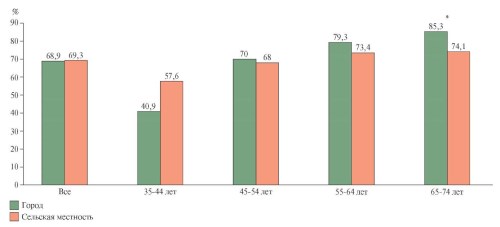
Results. No differences in the incidence of HTN were found depending on the type of settlement. Awareness of HTN was higher among men living in rural areas than among men living in urban areas, amounting to 91,8% vs. 81,1%, respectively (p<0,001). Rural men were more likely to take antihypertensive medications than urban men — 79,8% vs. 54,7%, respectively (p<0,001). Effective BP control was higher among urban men than among rural men — 32,3% vs. 16,3%, respectively (p<0,001).
Conclusion. The incidence of HTN among surveyed men in the Novosibirsk Oblast did not depend on the type of settlement. Awareness of HTN and antihypertensive therapy use were higher among rural men. However, despite this, effective BP control was achieved less frequently among them than among urban men. Prevailing factors for HTN have been identified for each community type, and targeted preventive measures are needed to reduce their impact.
CHRONIC HEART FAILURE
What is already known about the subject?
- Mitochondria are a source of reactive oxygen species. In pathologies, impaired mitochondrial respiratory chain are an additional cause of oxidative stress activation.
What might this study add?
- In healthy men, lipid peroxidation (LPO) product formation is higher than in women.
- Elevated levels of oxidative stress markers in heart failure (HF) with a high risk of sudden cardiac death (SCD) are independent of the patient's sex.
- The course of HF with a high risk of SCD, associated with diabetes, obesity, and dyslipidemia, is characterized by more intense LPO product formation with preserved superoxide dismutase activity.
- In HF with a risk of SCD, carriage of the G9055A polymorphism in mitochondrial deoxyribonucleic acid is characterized by significantly lower levels of thiobarbituric acid-reactive LPO substances compared to carriers of the A2706G substitution.
Aim. To assess the severity of oxidative stress and the presence of polymorphic variants of mitochondrial deoxyribonucleic acid (mtDNA) in patients with heart failure (HF) and a high risk of sudden cardiac death (SCD).
Material and methods. The study included 198 patients (78,79% men) diagnosed with HF and implantable cardioverter-defibrillators (ICDs) for the prevention of life-threatening ventricular tachycardia (VT) and SCD. The control group consisted of 28 healthy volunteers (men, 64,29%). Clinical and paraclinical parameters, plasma concentrations of thiobarbituric acid reactive lipid peroxidation substances (TBARS), superoxide dismutase (SOD) activity, and mtDNA polymorphisms A2706G/G3010A/G9055A were assessed.
Results. Patients with HF and a high risk of SCD had significantly higher TBARS and SOD levels compared to the control group. In the healthy volunteer group, men had higher TBARS levels and reduced SOD activity compared to women. In HF, sex differences were negated. Registered VT did not affect TBARS levels or SOD activity. Type 2 diabetes, obesity, and dyslipidemia in patients with HF and a high risk of SCD was associated with a significant increase in TBARS. Carriers of the G9055A polymorphism showed significantly lower TBARS concentrations compared to carriers of the A2706G polymorphism.
Conclusion. HF with a high risk of SCD is characterized by pronounced oxidative stress. Lipid peroxidation under normal conditions is significantly higher in men with reduced SOD activity. Impaired glucose and lipid metabolism in HF with a risk of SCD is accompanied by even more intense TBARS formation with unchanged SOD activity. Carriage of the G9055A mtDNA polymorphism is associated with low TBARS levels.
What is already known about the subject?
- Women with a history of complicated obstetrics have a higher risk of heart failure with preserved ejection fraction (HFpEF) in the long term compared to women with normal pregnancies.
What might this study add?
- Hypertensive disorders of pregnancy are associated with more pronounced concentric remodeling and left ventricular hypertrophy in elderly patients with HFpEF.
- A history of big-sized fetuses is associated with increased left ventricular mass and interventricular septal thickness in elderly women with HFpEF.
Aim. To evaluate structural and functional cardiac parameters in elderly women with heart failure with preserved ejection fraction (HFpEF) in association with unfavorable pregnancy factors and outcomes in history.
Material and methods. This cross-sectional study included 80 women aged 60-74 years with HFpEF and a history of pregnancy. All patients underwent echocardiography to assess the structural and functional parameters of the left heart. Obstetric history was collected using a standardized interview.
Results. Unfavorable factors and pregnancy outcomes in history were independently associated with an increase in left ventricular mass (LVM) (β=2,36 g; 95% confidence interval (CI): 0,94-3,78; p=0,002), relative left ventricular wall thickness (β=0,029; 95% CI: 0,005-0,053; p=0,016) and interventricular septal thickness (β=0,71 mm; 95% CI: 0,13-1,29; p=0,018). When analyzing individual factors, delivery of a big fetus was associated with an increase in absolute LVM (β=17,37 g; 95% CI: 1,32-33,42; p=0,036) and LVM index (β=19,59 g/m2; 95% CI: 5,49-33,69; p=0,011) and interventricular septal thickness (β=0,87 mm; 95% CI: 0,27-1,47; p=0,006). Hypertensive disorders of pregnancy were associated with an increase in the relative left ventricular wall thickness (β=0,030; 95% CI: 0,001-0,059; p=0,044).
Conclusion. In elderly women with HFpEF, a history of obstetric complications is associated with specific patterns of myocardial hypertrophy and concentric remodeling, suggesting its contribution to a distinct disease phenotype.
What is already known about the subject?
- Acute decompensated heart failure with preserved ejection fraction (HFpEF) is characterized by a high risk of readmission and high mortality within 1 year. There are no universal predictors of adverse outcomes in these patients.
- A search is underway for universal markers associated with hemodynamic impairment and systemic congestion in patients with acute decompensated HFpEF and their impact on long-term prognosis. Matrix metalloproteinases and their tissue inhibitors, which are directly involved in maladaptive extracellular matrix remodeling in response to stress factors, are considered as potential biological markers.
What might this study add?
- For the first time in Russia, levels of matrix metalloproteinases-2 and -9 (MMP-2 and MMP-9), tissue inhibitor of matrix metalloproteinases 1, and their ratios were assessed in patients with acute decompensated HF with EF. MMP-2 levels exceeding 361 ng/ml were found to be significantly associated with an unfavorable prognosis within one year after hospital discharge.
Aim. To evaluate the association between intracardiac hemodynamics, clinical parameters, and levels of circulating matrix metalloproteinase-2 and -9 (MMP-2, MMP-9), and tissue inhibitor of metalloproteinases 1 (TIMP-1), with adverse outcomes in patients with acute decompensated heart failure with preserved ejection fraction (HFpEF).
Material and methods. One hundred and sixty patients aged 47-96 years hospitalized with acute decompensate HFpEF were included. All patients underwent transthoracic echocardiography and laboratory testing, including determination of the N-terminal pro-brain natriuretic peptide (NT-proBNP) level. Serum samples were analyzed for MMP-2, MMP-9, and TIMP-1 using enzyme-linked immunosorbent assay.
Results. Univariate regression analysis revealed significant associations with primary composite endpoint as follows: prior coronary artery disease (CAD), reduced right ventricular systolic function, and elevated NT-proBNP >2514 pg/mL and MMP-2 levels >361 ng/mL. When these parameters were included in the multivariate regression model, MMP-2 levels >361 ng/mL and prior CAD retained statistical significance.
Conclusion. An association was demonstrated between MMP-2 levels >361 ng/mL on admission and a history of CAD with an adverse outcome in patients after decompensated chronic HFpEF within a year.
ATRIAL FIBRILLATION
What is already known about the subject?
- Pulmonary vein catheter ablation is a highly effective treatment for paroxysmal atrial fibrillation (AF).
- A key limitation of this method is the high rate of long-term arrhythmia recurrence.
- Autonomic imbalance is recognized as an important pathophysiological mechanism of AF. Transcutaneous vagus nerve stimulation (tVNS) is a noninvasive neuromodulation method with proven potential to influence autonomic nervous system balance.
What might this study add?
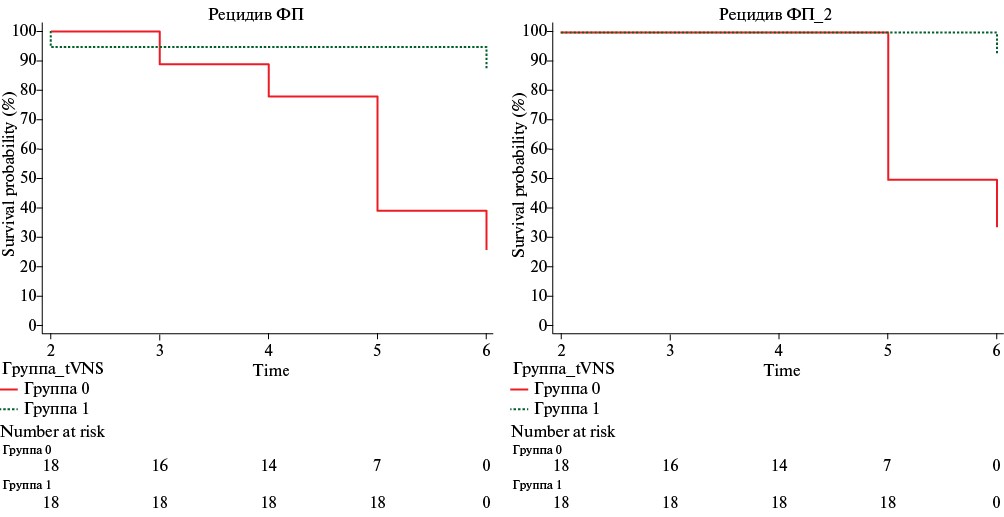
- For the first time, a randomized clinical trial has shown that a long-term (6-month) course of tVNS after cryoablation significantly reduces the risk of AF recurrence (11% vs 61% in the sham control group).
- Following multifaceted benefits have been demonstrated: tVNS not only prevents recurrences but also significantly improves patients' quality of life.
- The method has an excellent safety profile and high compliance, making it suitable for outpatient use.
- The results rationale consideration of tVNS as a promising adjuvant strategy for improving long-term ablation outcomes.
Aim. To evaluate the efficacy and safety of long-term (6 months) transcutaneous vagus nerve stimulation (tVNS) in reducing the risk of atrial fibrillation (AF) recurrence and improving quality of life (QOL) in patients after catheter cryoablation.
Material and methods. This randomized, double-blind, sham-controlled study was conducted. Patients with paroxysmal AF after cryoablation (n=42) were randomized into two following groups: an active group (n=20) receiving tVNS, and a sham-control group (n=21) using sham pacing. Pacing was performed daily for 1 hour for 6 months. The primary endpoint was AF recurrence. Personal home single-lead electrocardiography recorders were used to assess rhythm. In addition, we assessed quality of life using the Atrial Fibrillation Effect on Quality-oflife (AFEQT) and Arrhythmia-Specific Questionnaire in Tachycardia and Arrhythmia (ASTA) questionnaires, adverse device effects, and medication adherence (completion of ≥90% of prescribed pacing sessions over 6 months), assessed using device usage log data (for both groups).
Results. A total of 37 patients completed the study period, with 4 dropping out (3 in the sham-control group and 1 in the active group). The primary endpoint was recorded in 2 (11%) patients in the active group and 11 (61%) patients in the sham-control group (p<0,001). QOL indicators differed significantly after 6 months. In the active group, QOL indicators were significantly higher than in the sham-control group as follows: for the total AFEQT score — 69 (59;74) versus 57 (45;68) (p=0,033), as well as for the "symptoms" and "activity" scores — 92 (83;100) versus 79 (54;92) (p=0,019), and 81 (60;92) versus 60 (33;83) (p=0,041), respectively. According to the ASTA questionnaire, there were also significant differences in the "symptoms" score as follows: 3 in the active group (2;7) versus 5 (4;10) in the sham-control group (p=0,030). The use of tVNS demonstrated an excellent safety profile — there were no registered adverse events associated with the method.
Conclusion. Long-term transcutaneous electrical stimulation of the vagus nerve auricular branch is an effective and safe method that significantly reduces the risk of AF recurrence after catheter cryoablation and significantly improves patient quality of life. tVNS can be recommended as a promising noninvasive strategy for improving long-term outcomes in AF treatment after pulmonary vein cryoablation.
PUBLIC HEALTH
What is already known about the subject?
- Behavioral risk factors have an adverse impact on the course of noncommunicable diseases, including cardiovascular diseases (CVD), and require systematic identification, monitoring, and preventive measures as part of follow-up monitoring.
- Preventive counseling, especially in-depth one, is one of the main tools for multifactorial prevention in patients with behavioral risk factors.
What might this study add?
- Assessing the need for preventive measures within the follow-up monitoring regulations for patients with cardiovascular diseases depends not only on the management and completeness of the patient's preventive route, but also on the quality and completeness of the registration of preventive measures in medical statistical records.
- Despite a high proportion of referrals to the second stage of clinical examination and documented in-depth preventive counseling, its effectiveness remains insufficient. This justifies the need to improve and systematize interdisciplinary collaboration within the follow-up monitoring, as demonstrated by the example of patients with cardiovascular diseases.
Aim. To evaluate the preventive measures regulated within the followup monitoring program of patients with cardiovascular diseases based on medical records.
Material and methods. This retrospective analysis of data from form № 131/u for 2023-2024 was conducted in patients with hypertension and/or coronary artery disease under follow-up monitoring from a general practitioner within the Voronezh City Polyclinic № 10 and had registered behavioral risk factors (BRFs) and/or excess body weight. Compliance with the preventive route was assessed during the first outpatient visit of the year. The analysis included 178 forms № 131/u — 87 for 2023 and 91 for 2024; an additional cohort of patients with data for both years was identified (n=64). Descriptive statistics were used.
Results. Referral to the second stage of the outpatient examination was recorded in 91,6% of forms № 131/u. In-depth preventive counseling and follow-up appointments with a local general practitioner were performed in 90,8%. Incomplete completion of the preventive route was 9,2%. Excess body weight was recorded in 87,6% of forms № 131/u. In more than half of these forms it was combined with BRFs. The proportion of registered BRFs was unhealthy diet (46,1%), low physical activity (50,0%), tobacco smoking (3,4%); the risk of harmful alcohol consumption was not registered. In patients with data for both years, Me of individual differences in body weight, body mass index, systolic and diastolic blood pressure was 0,0; a decrease in body weight was recorded in 9,4%. The number of registered BRFs in 2024 was lower than in 2023 — Me Δ =-1,0 [-2,0; 0,0].
Conclusion. Form № 131/u can be used to assess the need for multifactorial preventive counseling and the implementation of preventive measures in cases of noncommunicable diseases, subject to monitoring the completeness and quality of the documentation.
CLINICAL TRIALS AND REGISTRIES
What is already known about the subject?
- Starting in 2024, the classification of heart failure (HF) stages in the Russian Federation was changed.
What might this study add?
- Cases of incorrect labeling pre-stage heart failure (HF) and stages 1 and 2 identified in the HOSTA СHF registry require outreach work.
- Pre-stage HF, although lacking qualifying criteria for HF, is included in its staging classification and appears to be an appropriate addition to the concept of total cardiovascular risk.
- The subjective assessment of criteria reflecting HF symptoms and response to therapy, without taking into account the persistent structural changes in different HF stages, may be the cause of the discrepancies in the definitions of HF stages 1 and 2.
Aim. To evaluate and compare the application and interpretation of heart failure stages by physicians based on the criteria of the previous and new classifications of heart failure (HF).
Material and methods. In October 2024, the new guidelines of the Russian Ministry of Health on HF, with revised classifications of HF stages, came into effect. It is unknown how accurately physicians apply the changes in the HF staging classification in practice. Data on diagnoses of 13902 patients with HF from the interregional registry HOSTA-CHF were analyzed. HF stages in the registry were reported using both classifications, in accordance with the 2020 and 2024 clinical guidelines of the Russian Society of Cardiology.
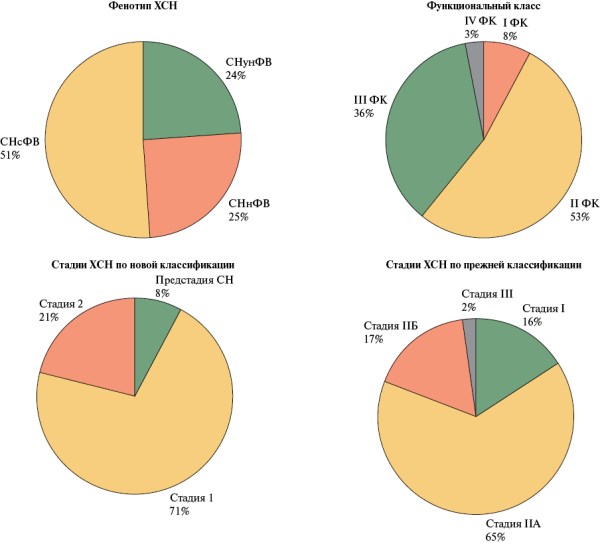
Results. The distribution of HF stages in the HOSTA-CHF registry is presented as follows: according to the 2024 HF classification, prestage HF accounts for 8%, stage 1 — 71%, and stage 2 — 21%; and according to the 2020 HF classification, stage I accounts for 16%, stage II A – 65%, stage II B — 17%, and stage III — 2%. Seventy percent of patients with pre-stage HF were reported as having stage I, 29% as having stage IIA, and 1% as having stage IIB, according to the 2020 classification. Seventy-four percent of patients with stage 1 HF according to the new classification were classified as stage IIA, 10% as stage IIB, and 16% as stage I according to the 2020 classification. Stage 2 according to the new classification was classified as stage 1 HF in 1% of patients, stage IIA in 52%, stage IIB in 39%, and stage III in 8% of patients according to the 2020 classification.
Conclusion. Analysis of the interim results of the HOSTA-HF interregional registry showed that practicing physicians are not accurately determining the HF stages according to the new 2024 HF classification, particularly pre-stage HF. Furthermore, discrepancies were identified in the definition of HF stages 1 and 2, likely due to the subjective nature of the criteria used, which reflect solely HF symptoms and response to therapy, but do not take into account the persistent, objective morphological and structural changes. Further work is required with all participants in the care of HF patients to avoid the repetition of incorrect diagnosis formulations and possible treatment errors, as well as the inevitable difficulties associated with medical and social assessment, statistical accounting, and healthcare budget planning.
What is already known about the subject?
- In 2022, the American Heart Association proposed the advanced Life's Essential 8 (LE8) score for a comprehensive assessment of cardiovascular health (CVH) across the lifespan. This score incorporates key cardiovascular risk factors and lifestyle factors, including diet, physical activity, sleep, smoking, body mass index, blood pressure, and lipid and carbohydrate metabolism.
- Numerous epidemiological studies have demonstrated an inverse, nonlinear, dose-dependent relationship between CVH levels and adverse cardiovascular outcomes in populations across various regions of the world.
- The specific parameters of this score and its components are characterized by significant geographic variability, and similar studies have not been conducted in the Russian Federation.
What might this study add?
- In a representative sample of the Krasnoyarsk Krai population, using the LE8 score among individuals aged 25-64 years, high CVH levels were found in only 13,7%.
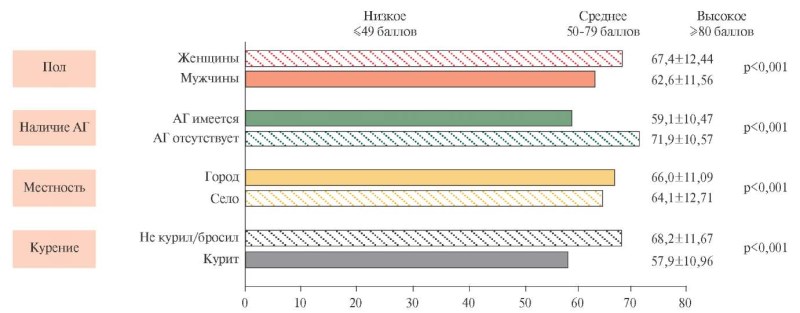
- The mean CVH score consistently decreased with age and was higher in women, urban residents, and those with higher than secondary education.
- Of the eight components of the LE8 score, the lowest scores were observed in the diet and blood pressure sections.
Aim. To assess the level of cardiovascular health (CVH) in a representative sample of the Krasnoyarsk Krai population using the adapted Life's Essential 8 (LE8) score.
Material and methods. The LE8 score includes eight assessed parameters (diet, physical activity, smoking status, sleep, blood pressure, non-HDL cholesterol, and carbohydrate metabolism) and then calculates the CVH arithmetic mean. CVH assessment was based on data from a representative sample of residents of Krasnoyarsk and the Berezovsky district aged 25-64 years (n=1603) recruited in 2014 as part of the ESSE-RF Russian epidemiological study.
Results. The mean CVH score for the entire sample was 65,55, higher in women than men, in urban residents than in rural residents, and in those with higher than secondary education. It consistently decreased with increasing age. Overall, 10,0% had a low, 76,3% — a moderate, and 13,7% — a high CVH level according to the LE8 score. Among the 8 components of the LE8 score, the lowest scores were observed in the diet and blood pressure sections.
Conclusion. When assessing CVH status using the LE8 score in a representative sample of adults aged 25-64 years in Krasnoyarsk Krai, only 13,7% of respondents had a high CVH level. Preventive programs aimed at correcting dietary habits and improving hypertension control may have the greatest potential for improving CVH.
ENDOVASCULAR INTERVENTIONS
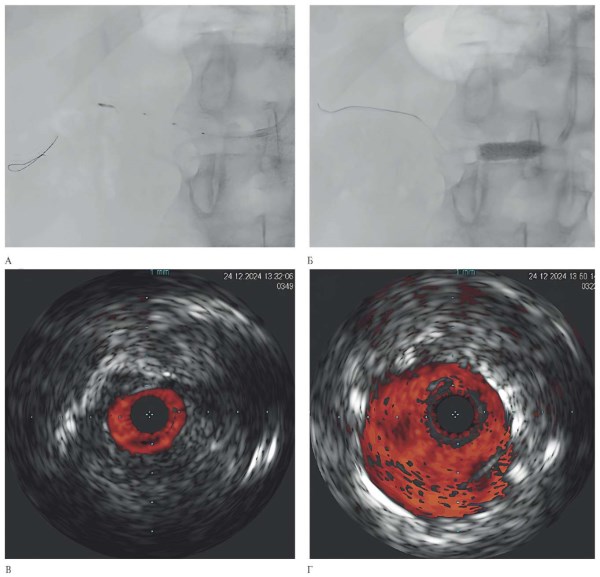
What is already known about the subject?
- Hemodynamically significant renal artery stenosis can lead to refractory hypertension and progressive decline in kidney function.
- Without revascularization, it is associated with an unfavorable prognosis, a high risk of disease progression, and death.
- Standard stenting requires the use of iodinated contrast agents and carries a risk of contrast-induced nephropathy.
- Intravascular ultrasound allows for vessel imaging without the use of contrast, making this method particularly valuable in patients with impaired renal function.
What might this study add?
- Renal artery stenting using intravascular ultrasound as the sole imaging modality is effective and safe in patients with reduced renal function and contraindications to contrast.
Aim. To analyze immediate and in-hospital outcomes of intravascular ultrasound (IVUS)-guided renal artery (RA) stenting without the use of radiocontrast agents in patients with chronic kidney disease (CKD) and renovascular hypertension.
Material and methods. This prospective single-center study included 26 patients with CKD stage C3a-C5 and hemodynamically significant RA stenosis based on triplex ultrasound imaging. The patient age (median [min-max]) was 63 [48-76] years; 61,5% were women. Before the procedure, the median glomerular filtration rate (GFR) was 24 [1447] ml/min/1,73 m2, and creatinine — 287 [184-390] μmol/L. A total of 96,2% of patients had refractory hypertension, and 3,8% had a high renal dysfunction rate. All stages of the intervention were performed entirely under IVUS guidance. Technical success of the procedure, perioperative complications, and the incidence of any major adverse events during the hospital stay were assessed. Systolic blood pressure, serum creatinine, and eGFR were analyzed at discharge.
Results. In two patients, IVUS revealed hemodynamically insignificant RA stenosis, therefore, stenting was not performed. The technical success of stenting was 100%. In 23 patients, the procedure was performed entirely without the use of a radiocontrast agent. In one patient, due to the specific RA involvement, ultra-low contrast administration was used. Following the intervention, the study group experienced a significant decrease in systolic blood pressure from 210 [140-260] to 130 [100-170] mm Hg (p<0,001) and serum creatinine from 287 [184-390] to 256 [144-378] μmol/L (p<0,001), with no change in GFR (p=0,43). No local complications or major adverse events were recorded during hospitalization.
Conclusion. IVUS-guided RA stenting in patients with CKD stage C3a-C5 without the use of radiocontrast agents is technically feasible, effective, and safe. This technique can be considered a promising alternative to traditional approaches in carefully selected patients with contraindications to the use of radiocontrast agents.
What is already known about the subject?
- There are preoperative factors that increase the risk of mortality after coronary artery bypass grafting (CABG).
- Predicting mortality after CABG can influence the decision on myocardial revascularization strategies.
What might this study add?
- The following factors associated with fatal outcome after CABG were identified: duration of myocardial infarction, multifocal atherosclerosis, functional class of heart failure, EuroSCORE II score, pulmonary hypertension, ejection fraction, unstable angina in the previous month, and class IV stable angina.
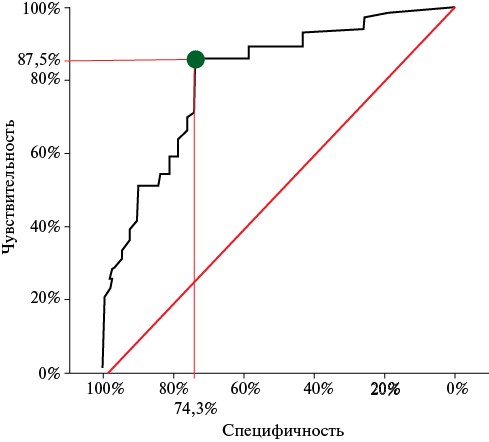
- The logistic model predicts fatal outcome after CABG with a sensitivity of 87,5% and a specificity of 74,3%.
Aim. To develop a model for assessing the fatal outcome probability after coronary artery bypass grafting (CABG) based on comprehensive preoperative patient characteristics.
Material and methods. The model of fatal outcome-associated factors after CABG was developed using medical records from 1584 patients who underwent isolated CABG between 2021 and 2024. Twenty-four preoperative patient characteristics were selected, from which factors associated with fatal outcome were identified. The study endpoint was death during CABG or within 30 days after surgery.
Results. Factors associated with fatal CABG outcomes were identified. At a p<0,05 level, the following factors were associated: time since the last myocardial infarction, multifocal atherosclerosis, and heart failure functional class. At a p<0,001 level, the following factors were associated: European System for Cardiac Operative Risk Evaluation II score (EuroSCORE II), pulmonary hypertension, ejection fraction, unstable angina in the previous month, and class IV stable angina. The final multivariate model included three following predictors: ejection fraction, unstable angina, and class IV angina. The model's sensitivity was 87,5% (95% confidence interval (CI): 71-96,5), and specificity — 74,3% (95% CI: 72-76,5).
Conclusion. Based on this study, we identified factors associated with mortality and created a logistic regression model that predicts the mortality likelihood during CABG and in the early postoperative period.
CLINIC AND PHARMACOTHERAPY
What is already known about the subject?
- Myopericardial symptoms were common among SARS-CoV-2 complications, and the incidence of chronic and recurrent pericarditis has increased.
- Complicated forms of pericarditis respond relatively well to treatment with interleukin-1 inhibitors (IL-1 inhibitors), but relapse rates reach 90% after drug discontinuation.
What might this study add?
- Administration of intravenous immunoglobulin to patients with chronic and recurrent pericarditis at the stage of discontinuation of anakinra therapy leads to overcoming of IL-1 dependence, improvement of tolerance of the withdrawal period, reduction of early relapses, and in patients who failed to discontinue IL-1, to a reduction in the dose of IL-1 for chronic administration.
Aim. Practical data indicating the optimal adjuvant therapy strategy for preventing and overcoming interleukin-1 inhibitor (IL-1I) dependence are lacking. Therefore, we evaluated the efficacy of intravenous immunoglobulin (IVIG) in patients with chronic (CP) and recurrent pericarditis (RP) during the discontinuation of IL-1I (anakinra).
Material and methods. The follow-up group included patients with chronic pancreatitis and recurrent pancreatitis who received anakinra 100 mg for >6 months. For 2 months, in parallel with a stepwise reduction in the anakinra dose and 2 months of its complete discontinuation, patients received IVIG infusions every 3-4 weeks. The comparison group consisted of patients who did not receive IVIG.
Results. Twenty-four patients were included (women, 50%), aged 44 (95% confidence interval: 26-63) years. Disease duration was 24 (95% confidence interval: 2-126) months, and the median anakinra therapy duration was 12 (7-14) months. In the IVIG group, the incidence of pericarditis recurrence during anakinra dose reduction or within 1 month after its discontinuation was significantly lower than in the group not receiving the immunomodulator: 2 vs 6 and 2 vs 7 cases, respectively. The number of patients with pericarditis exacerbations at 3 and 6 months was higher in the IVIG group (7 vs 5 and 7 vs 2, respectively). Early relapses more often required reintroduction of IL1β, while later relapses were more often treated with first-line agents. By the end of the study, 46% of patients in the study group and 83% of those in the comparison group continued to require anakinra. Of the patients who failed to completely discontinue IL-1β, 7 of 11 in the IVIG group received a reduced dose by the end of the study, compared with 8 of 20 in the standard therapy group.
Conclusion. In patients with CP and RP receiving anakinra, IVIG is effective in increasing the incidence of relapse-free IL-1β discontinuation and helps reduce the IL-1β dose required for symptom control.
RESEARCH METHODS
What is already known about the subject?
- Among non-invasive methods for measuring pulse wave velocity that record signals from the body surface, the carotid-femoral one is the most accurate and the only one acceptable for use.
- Applanation tonometry is traditionally used to record signals, although there are mentions of the possibility of using Dopplerography.
What might this study add?
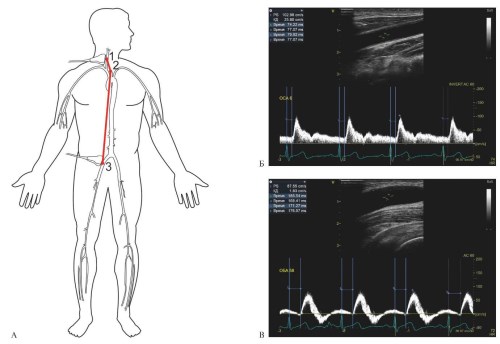
- The characteristics of the flow-pressure relationship in the carotid and femoral arteries, as well as the widespread use of Doppler ultrasound, make it attractive for assessing aortic stiffness.
- Doppler sonography measurement of carotid-femoral pulse wave velocity has very good reproducibility, making it a good choice for clinical and epide miological purposes.
Aim. To calculate the reproducibility of the Doppler method for measuring carotid-femoral pulse wave velocity (cfPWV), taking into account various methods for establishing the surface distance between measurement points.
Material and methods. Forty participants (men, 60%), aged 34,26±16,58 years, participated in this cross-sectional study. All patients underwent 2 sequential Doppler cfPWV measurements at intervals of 20 to 40 minutes, using the carotid-femoral distance obtained with a measuring tape, an electronic tape measure, or calculated using formulas.
Results. Concordance analysis revealed a very good agreement for paired cfPWV values in all methods of determining the carotid-femoral distance. Intraclass correlation coefficients were above 0,98 for all three conditions (p<0,0001), indicating excellent agreement. Bland-Altman analysis revealed small mean differences of 0,11±0,46, 0,08±0,49, and 0,02±0,36 m/s, respectively. The observed correlations between paired measurements were independent of sex, age, BMI, heart rate, and blood pressure.
Conclusion. The data demonstrated an excellent reproducibility of Doppler cfPWV measurement when used in ideal conditions and by experienced observers. The presented technical profile demonstrates that this technique meets the quality requirements for inclusion in comprehensive clinical monitoring programs.
CARDIOVASCULAR RISK FACTORS
What is already known about the subject?
- Coronary artery ectasia (CAE) is a rare cardiovascular condition (abnormal dilatation of the coronary arteries), with reported prevalence ranging from 1 to 5% of patients undergoing coronary angiography.
- The majority of adult cases are atherosclerotic in origin, although congenital and inflammatory causes also exist.
- Altered blood flow in ectatic segments can cause turbulence, stasis, and thrombus formation, increasing the risk of myocardial ischemia or infarction even without obstructive lesions.
What might this study add?
- The study reinforces the traditional cardiovascular factors like diabetes, hypertension, smoking, hypercholesterolemia, and family history of ischemic heart disease are strongly associated with CAE.
- This study helps refine which metabolic factors truly contribute to ectasia, preventing overestimation of risk from unrelated parameters.
- Recognizing CAE in patients may help anticipate complications (e.g., thrombus formation, myocardial ischemia) and guide management.
Aim. To determine the prevalence and risk factors of coronary artery ectasia (CAE), as well as the distribution of ectasia among the coronary vessels.
Material and methods. An observational comparison analytic study was conducted in two cardiac centers in Iraq from February 2020 to February 2021, involving 263 patients who underwent coronary angiography. Clinical data and cardiovascular factors were analyzed to identify associations with CAE using logistic regression.
Results. CAE was detected in 14.8% of the patients, a prevalence higher than that reported in similar studies in the region. Significant risk factors for CAE included male sex, older age, history of ischemic heart disease (IHD), family history of IHD, smoking, diabetes mellitus type-II, arterial hypertension, and hypercholesterolemia. Among the affected vessels, the right coronary artery (RCA) was the most commonly involved, followed by the left circumflex artery (LCX) and left anterior descending artery (LAD).
Conclusion. The prevalence of CAE in the Basrah/Iraq population was higher than in many other countries. CAE appears to be a multifactorial condition caused by traditional cardiovascular factors, with the RCA being the most frequently affected coronary vessel.
LITERATURE REVIEW
What is already known about the subject?
- This review provides a comprehensive analysis of risk stratification strategies in patients with the comorbid pathology of chronic kidney disease and coronary artery disease. The relevance of this topic is due to the significant increase in cardiovascular risk with the progression of renal dysfunction.
What might this study add?
- This paper systematizes data on modern prognostic scales and biomarkers, assessing their clinical significance and limitations of use.
- Particular attention is paid to integrative approaches that allow for the optimization of personalized prognosis and management tactics for this category of patients in real-world practice.
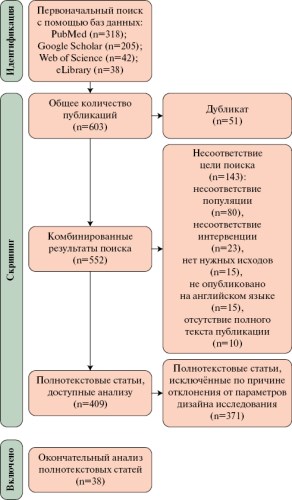
Currently, the search for reliable biomarkers that combine high sensitivity and specificity and allow for the accurate diagnosis of chronic kidney disease (CKD) in patients with coronary artery disease (CAD) remains a key challenge in modern medicine. This study presents a systematic review of the current literature on the relationship between CKD and CAD, with a focus on risk stratification and the diagnostic value of specific biomarkers. The search was conducted in accordance with the Preferred Reporting Items for Systematic Reviews and Meta-Analyses (PRISMA) guidelines and included the following databases: PubMed, Scopus, Web of Science, Google Scholar, CyberLeninka, eLibrary, and Clinical Trials. The quality of the selected publications was assessed using the Newcastle-Ottawa Scale for cohort studies and AMSTAR 2 for systematic reviews and meta-analyses. This literature review allowed us to systematize current data on the relationship between CKD and CAD and evaluate the role of key biomarkers in risk stratification in this patient population. The combination of these conditions creates a unique pathophysiological profile that requires special attention in both diagnosis and treatment. Biomarkers that require emphasis for more accurate risk stratification are described. This review demonstrated that CKD is an independent and powerful predictor of adverse outcomes after MI, stenting, and coronary artery bypass grafting. It is shown that therapy in this patient population requires an individualized approach.

ISSN 2619-0125 (Online)